Half-Up, Half-Down Hairstyles: Choose the Right Shape for Your Hair and Face
Choose a half-up style by crown volume, anchor height, face framing, hair density, texture, and occasion—with easy variations.
Quick answer
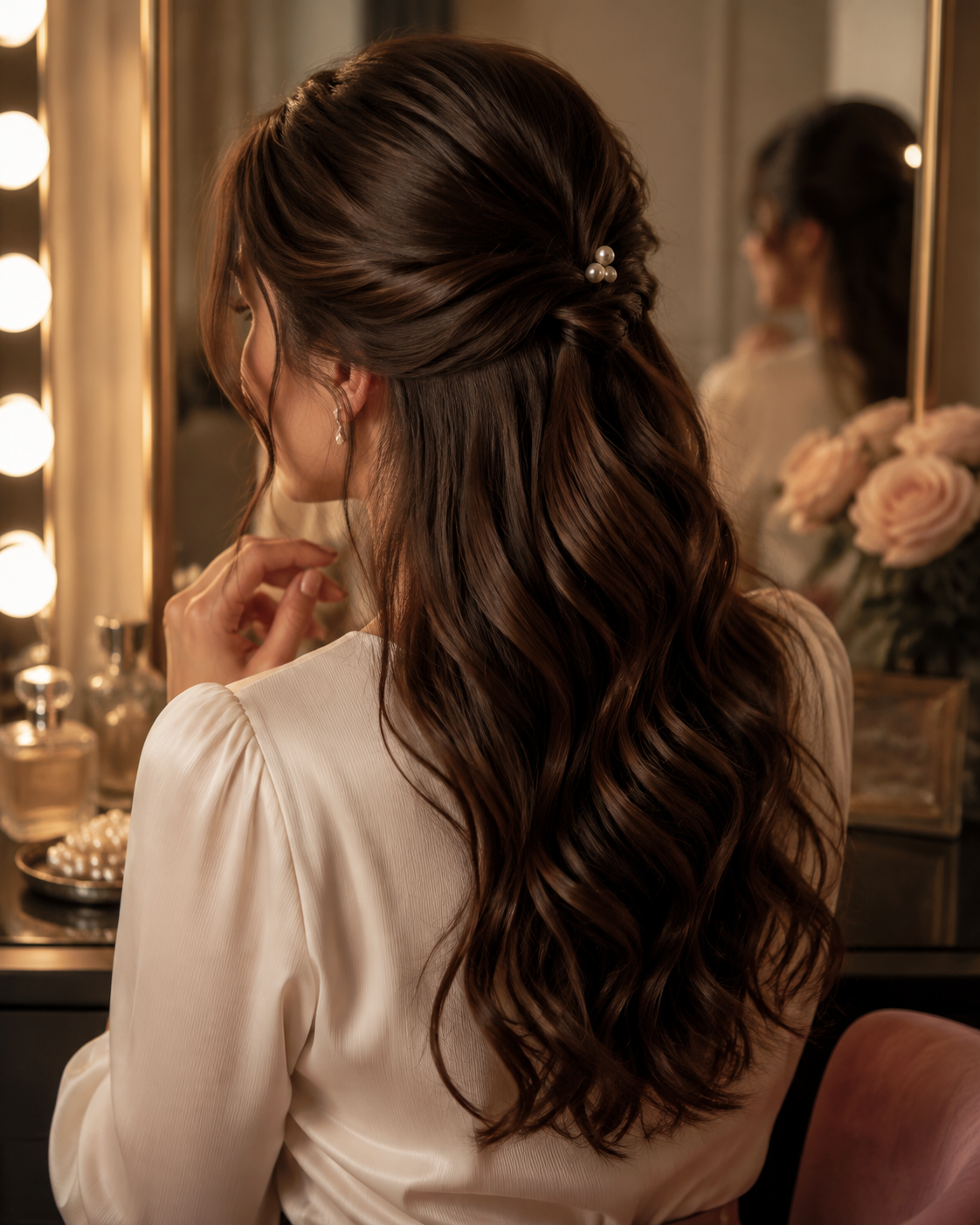
The best half-up, half-down hairstyle is determined by three choices: how much hair you take, where you anchor it, and what texture remains below. A high small section feels youthful and lifted; a low wide section feels romantic; a sleek center-parted version feels polished; a loose twisted version feels soft and casual.
Article
Control the section size
Fine hair often looks fuller when the half-up section is shallow, leaving more density down. Thick hair can support a deeper section but needs a stronger anchor. If the style looks sparse from the back, you probably took too much hair rather than needing more curls.
Place the anchor deliberately
Five useful variations
1. Mini high pony: small crown section, clean elastic, optional wrapped base.
2. Double twist: twist each side away from the face and pin where they meet.
3. Half-up knot: tie two side sections and pin the knot flat.
4. Braided crown: braid shallow temple sections and connect at the back.
5. Sleek barrette: smooth a low section over the ears and secure with one graphic accessory.
Adapt to face shape
For a round face, crown lift and longer side pieces introduce vertical movement. For a long face, keep the top flatter and allow gentle side width. For a square face, curved twists and loose framing soften. For an oval face, let hair texture and style mood lead.
Adapt to texture
On straight hair, a precise part and clean anchor make the style intentional. On waves, preserve movement by handling sections lightly. On curls and coils, follow curl groups and avoid brushing the loose section into frizz; a puff or braided top section can provide structure without fighting texture.
Common failures
- Pulling the section too tightly and flattening the crown.
- Using an anchor too weak for the hair's weight.
- Curling every piece identically, creating a rigid pageant finish.
- Taking wide temple sections that expose sparse areas.
- Adding multiple accessories, braids, curls, and face pieces without one clear focal point.
Explore hairstyle mood and face framing with StylePersona Hairstyle Analysis, then choose a version you can recreate with your actual density and texture.
Comparison
| Anchor | Effect | Good for |
|---|---|---|
| high crown | visible lift, energetic mood | flat roots, casual styling |
| mid-back | balanced, classic shape | most textures and occasions |
| low occipital | soft, elegant, romantic | waves, formal looks, accessories |
Salon-ready brief
“Use the article criteria to describe your goal, current hair, maintenance limit, and the result you want to avoid.”
Common Mistakes
- Pulling the section too tightly and flattening the crown.
- Using an anchor too weak for the hair's weight.
- Curling every piece identically, creating a rigid pageant finish.
- Taking wide temple sections that expose sparse areas.
- Adding multiple accessories, braids, curls, and face pieces without one clear focal point.
Compare the direction on your own photo before committing.
FAQ
How do I stop a half-up style from slipping?
Create light texture at the anchor, cross two pins underneath, or use a small elastic before adding the visible accessory.
Can short hair wear half-up styles?
Yes. Use a smaller top section, mini clip, temple twists, or a tiny pony. The shape matters more than length.
How do I make it formal?
Lower the anchor, refine the surface, use controlled bend, conceal elastics, and choose one well-scaled accessory.
Editorial Sources
- American Academy of Dermatology: healthy hair tips - Dermatologist-reviewed guidance on hair type, washing, conditioning, and heat-damage prevention.
- American Academy of Dermatology: coloring and perming tips - Dermatologist guidance on shade changes, patch testing, sun exposure, and chemical-service caution.
- StyleLens AI model disclosure - Product-specific disclosure for AI model use, generation limitations, and human-review expectations.
Related Cases
Keep Reading
Which Hairstyle Makes Your Face Look Smaller? A Face Shape Guide
A face-slimming hairstyle is not about hiding your face. It is about balancing crown lift, face-framing layers, and hair weight.
Are Curtain Bangs or Air Bangs Better for a Round Face?
For a round face, bangs should lengthen the center and lighten the sides rather than simply cover the forehead.
What Hair Color Looks Brighter and Still Works for Work?
A flattering work-friendly hair color balances brightness, polish, and maintenance instead of simply going lighter.
Compare hairstyle directions on your photo
Upload a photo and compare hairstyle shapes before you book the change.
Start analysis