Hairstyle for Face Shape: How to Choose a Cut That Fits You
Choose a hairstyle for your face shape using length, volume, bangs, layers, hair texture, and maintenance instead of one rigid chart.
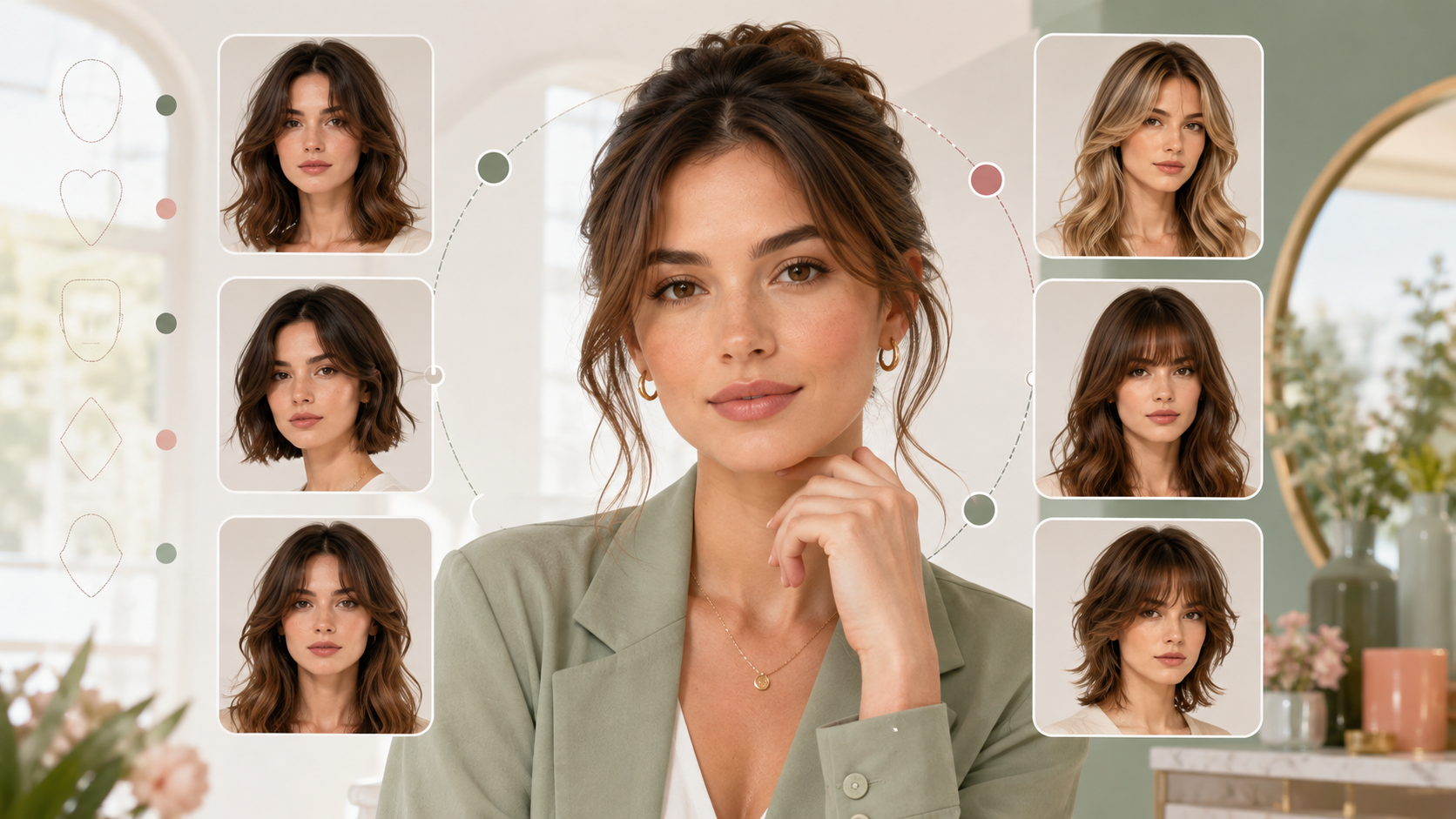
Quick answer
The best hairstyle for your face shape is not chosen from face shape alone. A useful match balances the outline of your face with hair density, texture, forehead height, jawline strength, styling time, and the amount of change you actually want. Face shape gives the direction; the final haircut comes from the full picture.
Article
Start with the face shape, then check the hair
Face shape describes the relationship between forehead width, cheekbone width, jawline, and face length. It can explain why a style feels too wide, too severe, too flat, or too closed around the face. But it should never be the only decision. The same round face can suit a lob, pixie, long layers, or curtain bangs depending on hair density, natural texture, and personal style.
Use five design levers
1. Length: Chin, collarbone, shoulder, and long lengths create different visual lines around the jaw and neck.
2. Volume: Crown lift lengthens; side volume widens; lower fullness softens a strong jaw.
3. Parting: Center parts create symmetry, while side parts add diagonal movement.
4. Bangs: Curtain, wispy, side-swept, blunt, and no-bang options change forehead length and cheek emphasis.
5. Layers: Face-framing layers can open the cheekbone area, soften the jaw, or keep weight away from the widest part of the face.
Match common face shapes to useful directions
Round faces often benefit from vertical movement, longer front pieces, and controlled width near the cheeks. Square faces can be softened with movement around the jaw or emphasized with a graphic blunt shape. Oval faces have more flexibility, so texture, density, lifestyle, and feature emphasis matter more. Long faces usually need balance through side softness, fringe, or volume that does not sit only at the crown.
Do not copy a chart without checking texture
A face-shape chart may say that a certain bang or bob is flattering, but hair behavior decides whether it will work in daily life. Fine hair may collapse under heavy layers. Thick hair may expand where the chart expects softness. Curly hair changes length after drying. Straight hair exposes perimeter mistakes quickly. A good hairstyle choice respects both proportion and behavior.
Use a photo-based check before making the change
Take one clear front-facing photo at eye level, with hair pulled back enough to see the forehead and jaw. Compare several directions: no bangs, curtain bangs, side part, center part, collarbone length, long layers, and a shorter option. The useful question is not only "What hairstyle suits my face shape?" but "Which option still looks balanced with my real hair, routine, and style mood?"
Salon brief
"I want a hairstyle that balances my face shape without depending on daily heat styling. Please consider my hair density, texture, forehead height, and jawline before choosing length, bangs, and layers. I want the style to frame my face, not hide it."
Preview directions with StylePersona Hairstyle Analysis, then use the more specific round, square, and oval face articles to refine the final brief.
Comparison
| Face shape signal | Useful hairstyle direction | Check before choosing |
|---|---|---|
| round face | vertical movement, longer front pieces, controlled cheek-level width | avoid making the widest hair point match the widest cheek point |
| square face | soft layers, diagonal fringe, below-jaw length, or deliberate blunt geometry | decide whether to soften the jaw or emphasize it |
| oval face | many lengths can work, so prioritize texture, density, and feature emphasis | do not choose only because oval is considered flexible |
| long face | side softness, fringe, waves, and balanced width | avoid adding height only at the crown if you want less length |
| heart or wider forehead | curtain fringe, cheekbone layers, or lower fullness | keep the fringe light enough to move naturally |
Salon-ready brief
“"I want a hairstyle that balances my face shape without depending on daily heat styling. Please consider my hair density, texture, forehead height, and jawline before choosing length, bangs, and layers. I want the style to frame my face, not hide it." Preview directions with StylePersona Hairstyle Analysis, then use the more specific round, square, and oval face articles to refine the final brief.”
Common Mistakes
- Choosing from a face-shape chart without checking hair density.
- Using heavy bangs to hide the face instead of balancing it.
- Ending layers exactly at the widest point you want to minimize.
- Copying a celebrity haircut without matching texture and maintenance level.
- Treating face shape as a beauty ranking instead of a styling input.
Compare the direction on your own photo before committing.
FAQ
What hairstyle suits my face shape?
Start by deciding whether your face needs more length, softness, openness, or structure. Then choose length, bangs, layers, volume, and parting based on your hair texture and daily routine.
How do I choose a hairstyle according to face shape?
Use face shape to find the main direction, then test the design levers: length, volume, parting, bangs, and layers. A balanced style should work with your real hair, not only with a reference photo.
Are hairstyles for face shape different from haircuts for face shape?
A haircut is the structural cut, while a hairstyle includes parting, volume, waves, bangs, and daily styling. Both affect face balance, so they should be chosen together.
Can an AI hairstyle analysis help me choose?
Yes. A photo-based analysis can compare length, bangs, layers, and styling directions on your own face. It should be used as a decision aid, not as a replacement for a stylist's in-person assessment of hair condition and cutting technique.
Should I choose a hairstyle only by face shape?
No. Face shape is only one input. Hair density, texture, natural part, forehead height, neck and shoulder proportion, maintenance, and personal style can change the best choice.
What is the safest hairstyle for most face shapes?
A collarbone-length cut with soft face framing is often a low-risk starting point because it creates movement without forcing a very short or very long shape. The details still need to be adapted to your hair.
Editorial Sources
- American Academy of Dermatology: healthy hair tips - Dermatologist-reviewed guidance on hair type, washing, conditioning, and heat-damage prevention.
- American Academy of Dermatology: coloring and perming tips - Dermatologist guidance on shade changes, patch testing, sun exposure, and chemical-service caution.
- StyleLens AI model disclosure - Product-specific disclosure for AI model use, generation limitations, and human-review expectations.
Related Cases
Keep Reading
Which Hairstyle Makes Your Face Look Smaller? A Face Shape Guide
A face-slimming hairstyle is not about hiding your face. It is about balancing crown lift, face-framing layers, and hair weight.
Are Curtain Bangs or Air Bangs Better for a Round Face?
For a round face, bangs should lengthen the center and lighten the sides rather than simply cover the forehead.
What Hair Color Looks Brighter and Still Works for Work?
A flattering work-friendly hair color balances brightness, polish, and maintenance instead of simply going lighter.
Compare hairstyle directions on your photo
Upload a photo and compare length, bangs, layers, and face-framing options before you book the change.
Start analysis