Best Hairstyles for Thin Hair: What Creates Visible Fullness
Make thin hair look fuller with the right perimeter, part, fringe, texture, color dimension, and realistic styling routine.
Quick answer
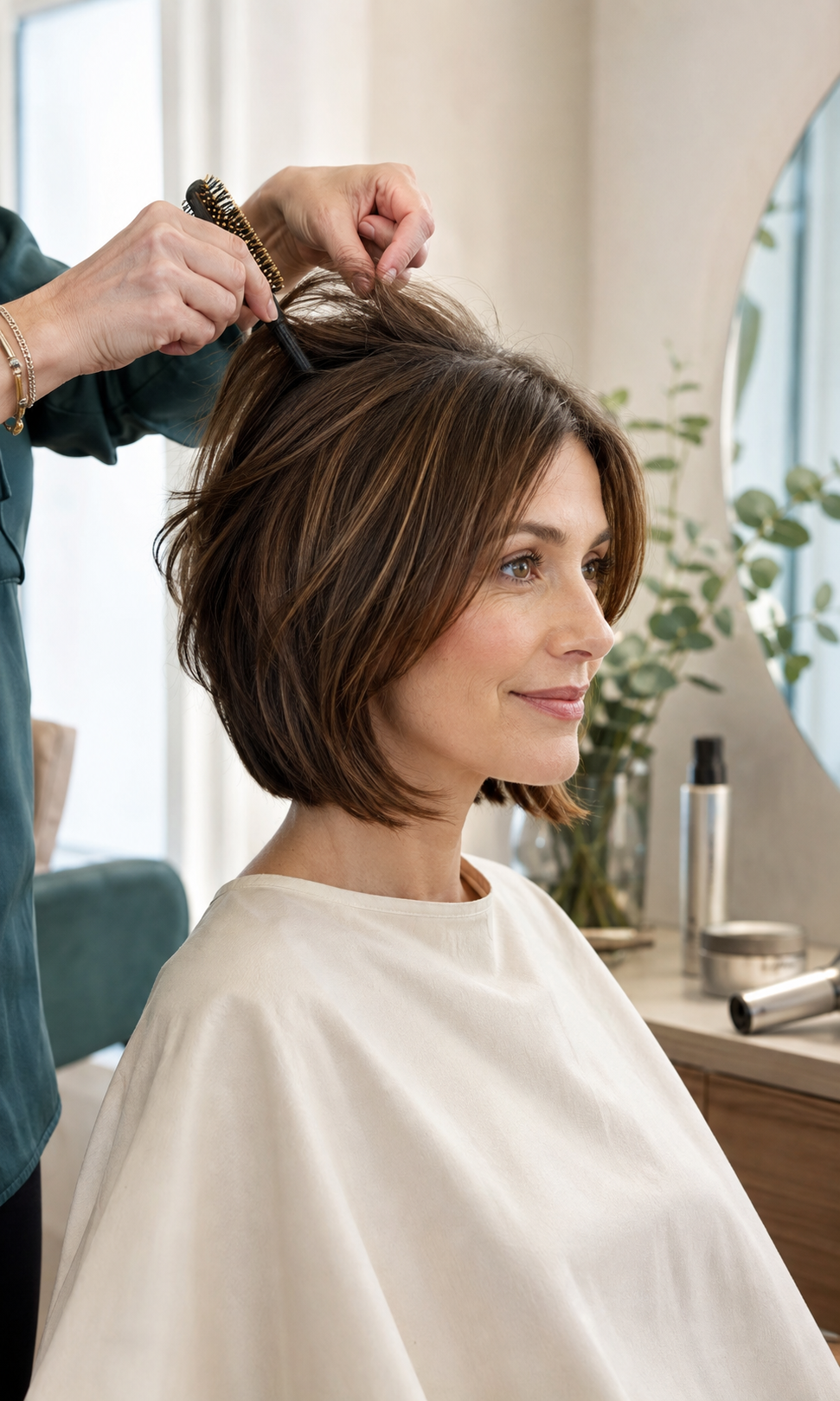
Thin hair looks fullest when the haircut concentrates mass, the roots are directed for lift, and the style avoids separating into sparse sections. Blunt or softly graduated bobs, collarbone lobs, restrained layers, soft pixies, and strategic side parts are reliable choices. The right option depends on where density is reduced and whether thinning is stable or changing.
Article
Map the pattern first
Diffuse low density behaves differently from a widening part, receding temples, or breakage at the ends. If hair loss is new, rapid, patchy, or accompanied by scalp symptoms, styling advice is not a substitute for medical assessment. For stable density, visual design can make a meaningful difference.
The fullness toolkit
- Strong perimeter: makes the lower edge appear denser.
- Shorter length: reduces weight that pulls roots flat.
- Strategic fringe: can soften a sparse hairline, but must not take too much hair from behind it.
- Part variation: breaks a persistent flat root pattern.
- Low-contrast dimension: creates visual texture without making the base look fragmented.
- Matte, lightweight styling: separates strands without exposing large gaps.
Cuts by thinning pattern
Color can help—or hurt
Subtle tonal variation reduces the appearance of a flat sheet of hair. But very dark uniform color against a light scalp can increase contrast, while aggressive highlights may weaken fragile strands. Choose condition-preserving, low-contrast dimension when fullness is the priority.
Salon brief
"My main concern is visible density at [area]. Keep the outline strong, avoid removing bulk from the ends, and design the part and front pieces so I can style them in more than one direction. I prefer a realistic five-minute routine."
Compare density-preserving cuts with StylePersona Hairstyle Analysis. Use a clear front-facing photo so parting and face-frame options can be assessed together.
Comparison
| Pattern | Consider | Avoid overdoing |
|---|---|---|
| flat crown | soft graduation, side part, shorter length | heavy top layers that separate |
| sparse temples | light curtain/side fringe, forward direction | very wide dense bangs |
| transparent ends | blunt bob or lob | long feathered layers |
| widening part | flexible part, textured crop, soft volume | slick high-contrast parting |
Salon-ready brief
“"My main concern is visible density at [area]. Keep the outline strong, avoid removing bulk from the ends, and design the part and front pieces so I can style them in more than one direction. I prefer a realistic five-minute routine." Compare density-preserving cuts with StylePersona Hairstyle Analysis. Use a clear front-facing photo so parting and face-frame options can be assessed together.”
Common Mistakes
- Choosing from one inspiration photo only.
- Ignoring hair behavior and maintenance.
- Skipping the avoid-list before booking.
Compare the direction on your own photo before committing.
FAQ
Are bangs good for thin hair?
They can disguise temple or hairline concerns, but a large fringe section may reduce density elsewhere. Light, adaptable bangs are safer than a very deep section.
Does long thin hair always look thinner?
Not always, but weight and transparent ends can emphasize low density. A shorter strong perimeter usually gives a fuller impression.
Should thin hair have texture?
Soft bend and root lift can increase visible fullness. Extremely piecey styling can reveal more scalp, so keep separation controlled. ---
Editorial Sources
- American Academy of Dermatology: healthy hair tips - Dermatologist-reviewed guidance on hair type, washing, conditioning, and heat-damage prevention.
- American Academy of Dermatology: coloring and perming tips - Dermatologist guidance on shade changes, patch testing, sun exposure, and chemical-service caution.
- StyleLens AI model disclosure - Product-specific disclosure for AI model use, generation limitations, and human-review expectations.
Related Cases
Keep Reading
Which Hairstyle Makes Your Face Look Smaller? A Face Shape Guide
A face-slimming hairstyle is not about hiding your face. It is about balancing crown lift, face-framing layers, and hair weight.
Are Curtain Bangs or Air Bangs Better for a Round Face?
For a round face, bangs should lengthen the center and lighten the sides rather than simply cover the forehead.
What Hair Color Looks Brighter and Still Works for Work?
A flattering work-friendly hair color balances brightness, polish, and maintenance instead of simply going lighter.
Compare hairstyle directions on your photo
Upload a photo and compare hairstyle shapes before you book the change.
Start analysis