Best Haircut for Fine Hair: Build Density Before Adding Volume
Find cuts that make fine hair look fuller by protecting the perimeter, controlling layers, and placing volume strategically.
Quick answer
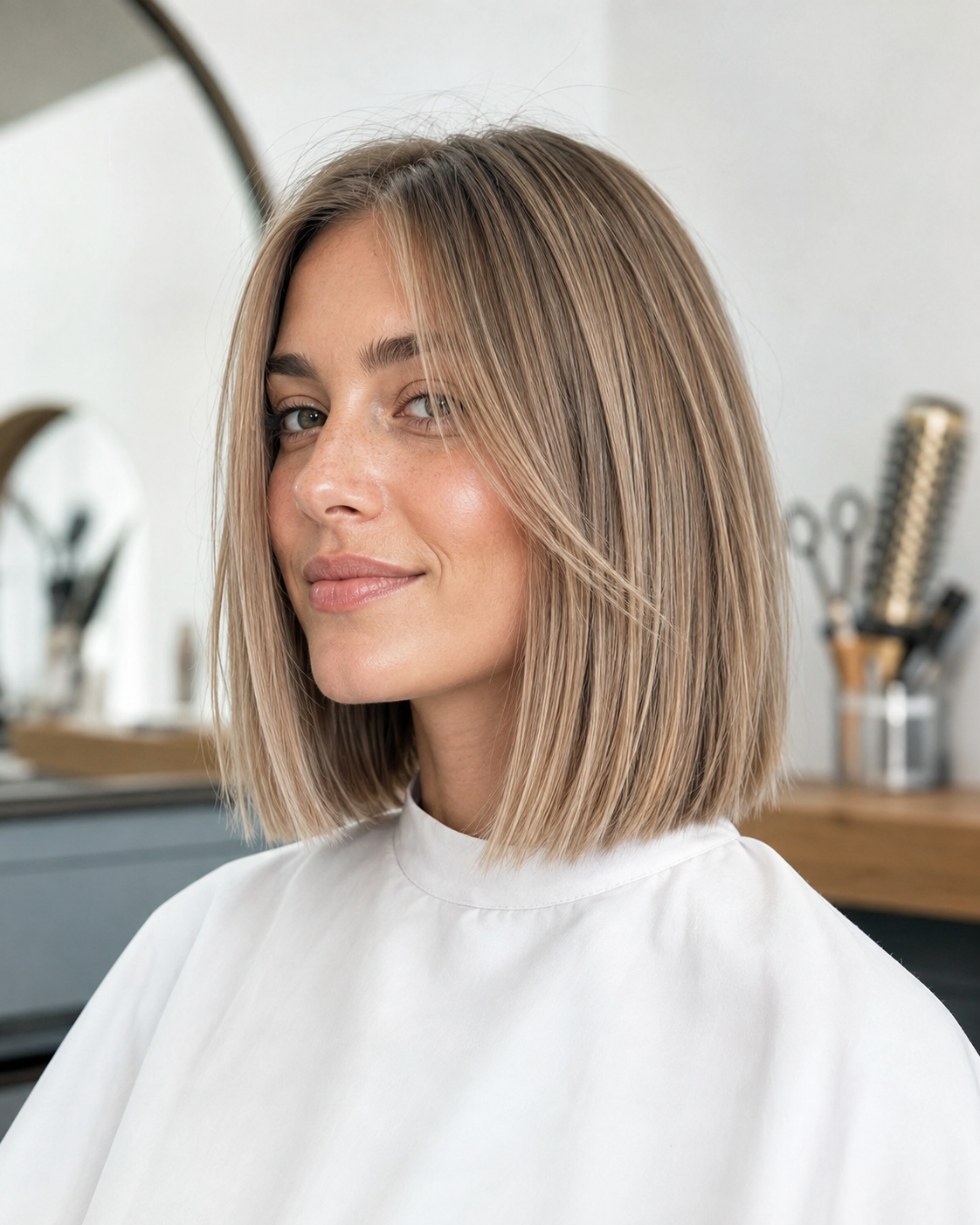
The best haircut for fine hair usually protects density at the perimeter and uses fewer, more deliberate layers. A blunt bob, softly graduated bob, collarbone lob, or compact mid-length cut often looks fuller than very long, heavily layered hair. Fine describes strand diameter; it does not automatically mean low density, so the cut must account for both.
Article
Fine vs thin: the important distinction
Fine hair has small-diameter strands. Thin hair has fewer strands or more visible scalp. You can have fine but dense hair, or coarse but thinning hair. Fine dense hair may handle layering well; fine low-density hair usually needs a stronger outline and careful sectioning.
Why the perimeter matters
When many layers remove hair from the bottom edge, the ends can look transparent. A cleaner baseline concentrates visible mass. That does not mean every fine-hair cut must be blunt; soft internal movement can prevent flatness without sacrificing the outline.
Best starting shapes
Volume is a styling system
A haircut creates architecture; it cannot permanently create more strands. Root direction, part placement, lightweight products, drying technique, and color dimension influence visible fullness. A slightly off-center part often produces instant lift. Heavy oils applied near the roots can undo a good cut.
Salon brief
"My strands are fine and my density is [low/medium/high]. Keep a strong perimeter, use minimal layers only where they create movement, and avoid thinning shears through the ends. I want the cut to look full when air-dried."
Preview the difference between blunt, graduated, and layered silhouettes with StylePersona Hairstyle Analysis.
Comparison
| Cut | Benefit | Risk to manage |
|---|---|---|
| one-length bob | maximum visible density | can lie flat without root direction |
| graduated bob | stacked fullness at back | over-graduation can look dated or bulky |
| collarbone lob | versatile and still dense | ends may flip at shoulders |
| soft pixie | turns fineness into light texture | requires frequent shape maintenance |
| compact midi | keeps styling options | excessive long layers thin the edge |
Salon-ready brief
“"My strands are fine and my density is [low/medium/high]. Keep a strong perimeter, use minimal layers only where they create movement, and avoid thinning shears through the ends. I want the cut to look full when air-dried." Preview the difference between blunt, graduated, and layered silhouettes with StylePersona Hairstyle Analysis.”
Common Mistakes
- Choosing from one inspiration photo only.
- Ignoring hair behavior and maintenance.
- Skipping the avoid-list before booking.
Compare the direction on your own photo before committing.
FAQ
Is short hair always better for fine hair?
No, but shorter lengths often reduce weight and make the perimeter look denser. Healthy fine hair can still be worn long with conservative layering.
Do layers add volume to fine hair?
They can add movement and lift, but too many remove density. Placement and amount matter more than the word "layers."
Should fine hair be razor cut?
Sometimes, for soft texture in dense fine hair. On fragile or low-density ends, a razor can make the outline look thinner. ---
Editorial Sources
- American Academy of Dermatology: healthy hair tips - Dermatologist-reviewed guidance on hair type, washing, conditioning, and heat-damage prevention.
- American Academy of Dermatology: coloring and perming tips - Dermatologist guidance on shade changes, patch testing, sun exposure, and chemical-service caution.
- StyleLens AI model disclosure - Product-specific disclosure for AI model use, generation limitations, and human-review expectations.
Related Cases
Keep Reading
Which Hairstyle Makes Your Face Look Smaller? A Face Shape Guide
A face-slimming hairstyle is not about hiding your face. It is about balancing crown lift, face-framing layers, and hair weight.
Are Curtain Bangs or Air Bangs Better for a Round Face?
For a round face, bangs should lengthen the center and lighten the sides rather than simply cover the forehead.
What Hair Color Looks Brighter and Still Works for Work?
A flattering work-friendly hair color balances brightness, polish, and maintenance instead of simply going lighter.
Compare hairstyle directions on your photo
Upload a photo and compare hairstyle shapes before you book the change.
Start analysis