Best Hair Color for Your Skin Tone: Fair, Medium, Tan, Olive, and Deep
Match hair color to fair, medium, tan, olive, or deep skin while accounting for undertone, contrast, and maintenance.
Quick answer
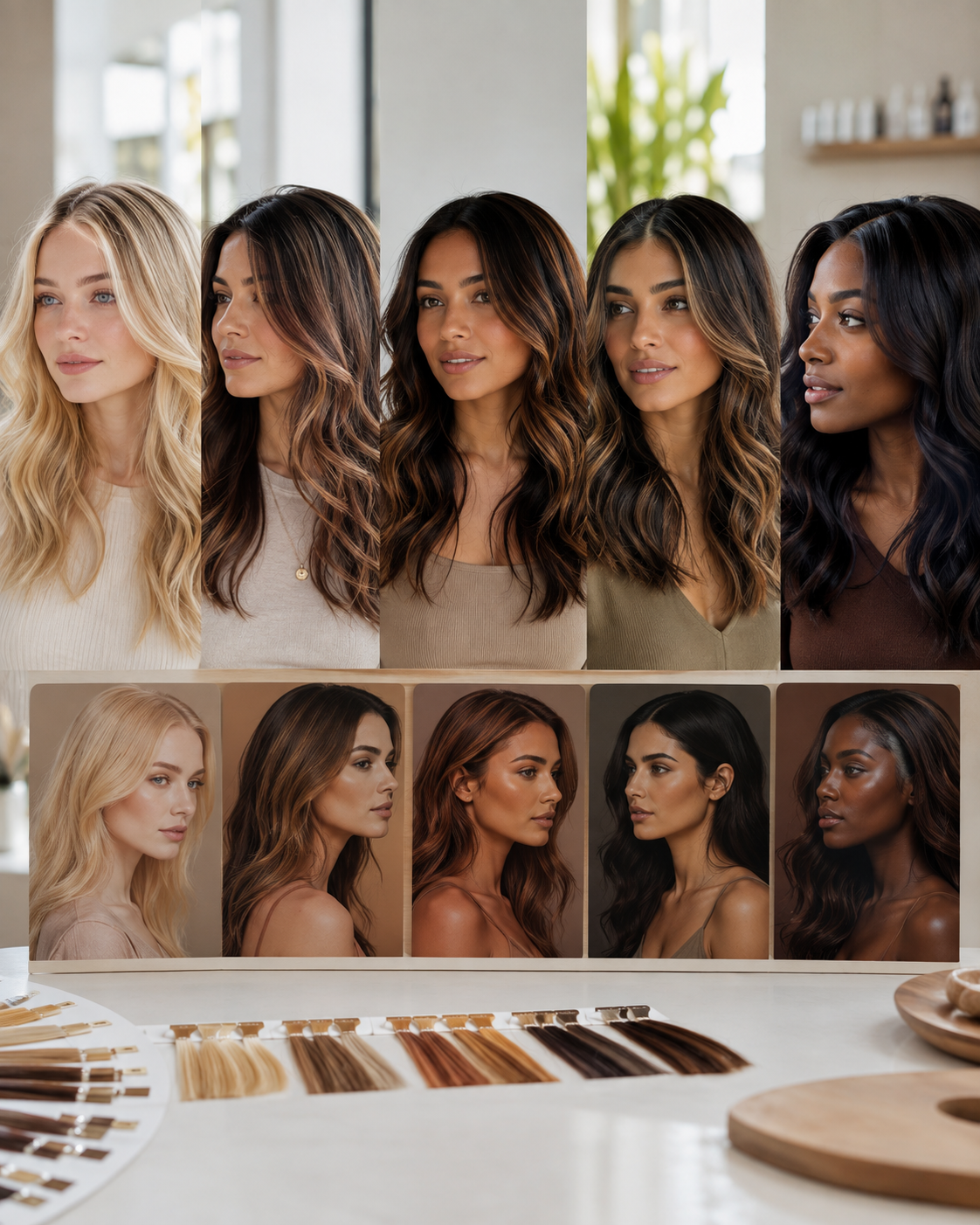
Skin depth tells you how much visual contrast a hair color creates; undertone tells you which versions of that color are most likely to make the complexion look clear. You need both. "Brown" can mean golden chestnut, neutral mocha, cool espresso, or red mahogany—and those versions behave very differently beside the same skin depth.
Article
The practical matrix
This table is a starting point, not a rulebook. If your brows, eyes, and personal style support stronger contrast, you can often wear a color outside the expected family by adjusting saturation or placement.
Fair and pale skin
The biggest decision is usually contrast. Very dark color can make fair skin look porcelain and striking, but it may also emphasize redness and require stronger brow or makeup definition. Light beige, soft copper, and light brown tend to feel gentler. If you have cool fair skin, avoid assuming that every warm shade is wrong: a controlled strawberry or beige warmth can create healthy contrast, while an extremely ashy color may look dull.
Medium skin
Medium skin has range. The most natural-looking upgrades usually come from dimension rather than a dramatic level change: a neutral brunette base with caramel ribbons, chestnut with subtle copper, or mocha with beige face-framing pieces. Keep the brightest pieces near areas you want to emphasize, such as cheekbones or eyes.
Tan skin
Tan skin often benefits from visible separation between skin and hair. Rich espresso creates clean definition; toffee and bronze add warmth; copper can look vibrant when saturation matches the complexion. Avoid choosing blonde solely because it looks bright in an inspiration photo. A deeper root, lower-contrast transition, and strategically placed lightness are often more cohesive.
Olive skin
Olive is an undertone pattern, not a depth. The challenge is avoiding colors that make the skin appear more green or yellow. Neutral shades are a safe testing ground: cocoa, mushroom brown, neutral black, or bronze brunette. Then move incrementally warmer or cooler based on how the face responds in daylight.
Deep skin
Deep complexions can carry both rich darkness and vivid color exceptionally well. The question is whether you want harmony or contrast. Espresso, natural black, and mahogany create continuity; copper, caramel, burgundy, or lighter face-framing sections create focus. On curls and coils, tonal dimension also helps the pattern read clearly in photographs.
Test correctly
Compare colors on a makeup-light photo taken beside a window, with hair pulled away from the face. Do not judge from a bathroom photo under yellow light. Test at least one harmonious shade, one slightly warmer option, one slightly cooler option, and one higher-contrast option. The best result is the one that makes your eyes and skin look clearer before you notice the hair color itself.
Use StylePersona Personal Color Analysis to establish your color direction, then compare realistic hair options with Hair Color Analysis.
Comparison
| Skin depth | Warm/neutral directions | Cool/neutral directions |
|---|---|---|
| Fair | honey beige, strawberry blonde, soft copper, light chestnut | pearl beige, mushroom blonde, cool light brown |
| Medium | caramel brown, chestnut, amber highlights | mocha, neutral brunette, muted burgundy |
| Tan | toffee, cinnamon, rich copper, golden brunette | neutral espresso, cool chocolate, plum-brown |
| Olive | neutral chestnut, bronze brown, controlled caramel | mushroom brown, neutral black, cool cocoa |
| Deep | espresso, warm black, mahogany, copper accents | blue-black, deep plum, cool dark brown |
Salon-ready brief
“Use the article criteria to describe your goal, current hair, maintenance limit, and the result you want to avoid.”
Common Mistakes
- Choosing from one inspiration photo only.
- Ignoring hair behavior and maintenance.
- Skipping the avoid-list before booking.
Use StylePersona Personal Color Analysis to establish your color direction, then compare realistic hair options with Hair Color Analysis.
FAQ
What hair color looks best on tan skin?
Rich brunette, espresso, bronze, caramel, cinnamon, and controlled copper are strong starting points. Undertone and desired contrast decide the specific version.
What is the best hair color for pale skin?
Soft beige blonde, light brown, controlled copper, and cool mushroom tones often work. Very dark hair can also work when deliberate high contrast suits your features and style.
Does a tan change my ideal hair color?
It can change the visible contrast temporarily. Reassess very light highlights and warmth across seasons, but base permanent decisions on your usual skin depth. ---
Editorial Sources
- American Academy of Dermatology: healthy hair tips - Dermatologist-reviewed guidance on hair type, washing, conditioning, and heat-damage prevention.
- American Academy of Dermatology: coloring and perming tips - Dermatologist guidance on shade changes, patch testing, sun exposure, and chemical-service caution.
- StyleLens AI model disclosure - Product-specific disclosure for AI model use, generation limitations, and human-review expectations.
Related Cases
Keep Reading
What Hair Color Looks Brighter and Still Works for Work?
A flattering work-friendly hair color balances brightness, polish, and maintenance instead of simply going lighter.
How Personal Color Analysis Works: A Simple Seasonal Color Guide
Personal color is not just a season label. It is a practical range of colors that makes your skin look cleaner.
Which Hairstyle Makes Your Face Look Smaller? A Face Shape Guide
A face-slimming hairstyle is not about hiding your face. It is about balancing crown lift, face-framing layers, and hair weight.
Compare color directions on your photo
Upload a photo and compare realistic hair color directions before you commit.
Start analysis