AI Face Shape Detector: How It Works and What It Can Tell You
Learn what an AI face shape detector can identify from a photo, how accurate it can be, and how to use the result for hairstyles, bangs, and face framing.
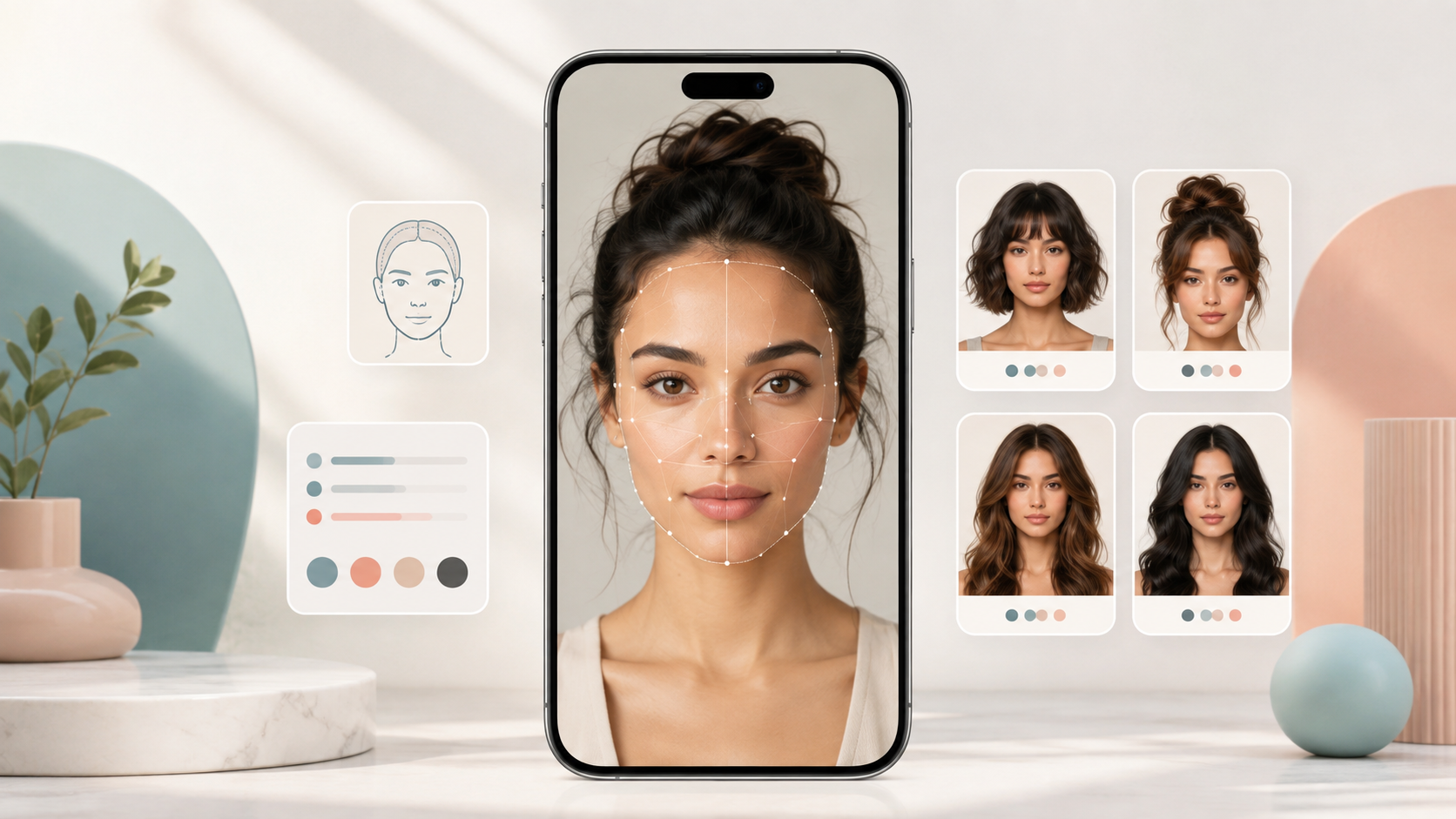
Quick answer
An AI face shape detector can help you read the visible proportions in a photo: face length, forehead width, cheekbone width, jawline shape, and where the face carries visual weight. The useful result is not just a label such as round, oval, square, heart, or long. It is a starting point for better hairstyle, bangs, layers, and face-framing decisions.
Article
What an AI face shape detector checks
A face shape detector usually starts from visible landmarks: forehead, cheekbones, jaw corners, chin, and face length. From those signals, it estimates whether the face reads round, oval, square, heart, diamond, or long. A good result should also explain the reason, because two people can share the same label but need different hairstyle choices.
What it can tell you from one photo
The most useful output is a proportion reading. It can show whether the widest point is near the cheeks, whether the jawline is curved or angular, whether the forehead is visually dominant, and whether the face needs more vertical movement, softness, openness, or structure. Those details translate directly into haircut and styling choices.
How accurate it can be
Accuracy depends heavily on the photo. A straight-on image at eye level works better than a close selfie, tilted angle, heavy smile, strong shadow, or hair covering the jaw. AI can estimate visible proportions, but it cannot perfectly account for lens distortion, posture, haircut volume, or how the style behaves in real life.
Face shape is only the starting point
The detector should not decide your haircut by itself. Hair density, texture, natural part, forehead height, neck length, personal style, and daily maintenance all change the final answer. Face shape tells you where balance may be needed; your hair and lifestyle decide which option is realistic.
How to use the result for hairstyles
After you know the likely face shape, test hairstyle levers one by one: length, parting, bangs, face-framing layers, and volume placement. Round faces often need vertical movement and controlled side width. Square faces may use softness around the jaw or deliberate graphic structure. Long faces usually need balanced width rather than extra crown height. Oval faces should use texture and feature emphasis to choose among many workable options.
How to take a better detection photo
Use natural front light, keep the camera at eye level, step back far enough to reduce lens distortion, and pull hair away from the forehead and jaw. Keep your expression relaxed. If your result seems wrong, test a second photo before changing your style plan.
Comparison
| Detector signal | What it may mean | How to use it |
|---|---|---|
| cheeks are widest | the face may read round or diamond depending on jaw and chin | control side volume and test longer face-framing lines |
| jaw is angular | the face may read square or rectangle | choose whether to soften with movement or emphasize structure |
| forehead is wider than jaw | the face may read heart or inverted triangle | try curtain fringe, cheekbone layers, or lower fullness |
| face length is dominant | the face may read long or oblong | avoid only adding crown height; test side softness or fringe |
| balanced length and width | the face may read oval | let hair texture, density, and style mood make the final choice |
Salon-ready brief
“"My photo-based face shape result suggests [round/square/oval/long/heart], but I want the haircut chosen with my real hair texture and routine in mind. Please use the result to guide face framing, length, bangs, and volume placement rather than following a rigid chart."”
Common Mistakes
- Uploading a close selfie and trusting the result without checking lens distortion.
- Letting hair cover the jawline, then expecting a precise face shape reading.
- Treating round, square, or long as negative labels.
- Choosing a haircut from face shape alone while ignoring hair texture.
- Expecting AI to replace a stylist's assessment of hair condition and cutting technique.
Use a clear photo and compare the result with hairstyle directions before committing.
FAQ
What is an AI face shape detector?
It is a photo-based tool that estimates visible face proportions such as length, forehead width, cheekbone width, jawline shape, and chin shape, then turns those signals into a likely face shape category.
Can AI tell me my exact face shape?
AI can estimate your visible face shape from a suitable photo, but the result is not absolute. Camera angle, lens distance, expression, lighting, and hair coverage can all affect the reading.
What photo should I use for face shape detection?
Use a clear front-facing photo at eye level with relaxed expression, natural light, and hair pulled away from the forehead and jaw. Avoid close selfies and tilted angles.
How do I use face shape results for hairstyles?
Translate the result into styling choices: length, parting, bangs, face-framing layers, and volume placement. Then adjust those choices for your hair texture, density, and daily styling effort.
Is face shape enough to choose a haircut?
No. Face shape is a starting point. Hair density, texture, natural part, forehead height, neck proportion, personal style, and maintenance level decide whether the haircut will work in real life.
Can an AI face shape detector help with bangs?
Yes. It can suggest whether curtain bangs, wispy bangs, side-swept bangs, or no bangs may balance your proportions, but the final choice should also consider cowlicks, forehead height, and styling habits.
Editorial Sources
- American Academy of Dermatology: healthy hair tips - Dermatologist-reviewed guidance on hair type, washing, conditioning, and heat-damage prevention.
- American Academy of Dermatology: coloring and perming tips - Dermatologist guidance on shade changes, patch testing, sun exposure, and chemical-service caution.
- StyleLens AI model disclosure - Product-specific disclosure for AI model use, generation limitations, and human-review expectations.
Related Cases
Keep Reading
Which Hairstyle Makes Your Face Look Smaller? A Face Shape Guide
A face-slimming hairstyle is not about hiding your face. It is about balancing crown lift, face-framing layers, and hair weight.
Are Curtain Bangs or Air Bangs Better for a Round Face?
For a round face, bangs should lengthen the center and lighten the sides rather than simply cover the forehead.
What Hair Color Looks Brighter and Still Works for Work?
A flattering work-friendly hair color balances brightness, polish, and maintenance instead of simply going lighter.
Detect your face shape and compare hairstyle directions
Upload a photo to compare face shape, bangs, length, layers, and face-framing options in one hairstyle analysis.
Start analysis